Showing posts with label How To Be A Writer. Show all posts

Friday, July 29, 2016

An Interview and a Question: What Does it Take to Make You Feel Like an Author?

strange thing 2
A strange thing happened on the way to the blog.  I received an email out of the blue from someone I’ve never heard of.  That’s not so strange in itself; I get enough spam to feed a spambot until it vomits flowery poetry.

What was strange is that it was a request for an interview.  This wasn’t the usual, “Let’s fill out interview questions and share them on each other’s blogs to cross promote ourselves,” interview request.  This was a straight up, “I want to interview you.”
 It surprised me.  The first thing I did was check the email address it came from.  It looked legitimate.  Then I skimmed (that’s what my eleven year old called it) her online.  I Googled, found and checked profiles on Facebook and LinkedIn, investigating if the person looks legitimate.  She looked legitimate.
uh oh
It was time for the, “Oh, uh, wow?” moment.  Me?  Why me?  Out of all the authors out there?
 Now I had to know.  I’m not a cat, so hopefully curiosity won’t bring me to my swift demise.
 I asked others on one of the author groups what they thought.
 I contacted the young lady requesting the interview to ask those two big questions: Why me? - and - How did you happen to find me?
 Honestly, I didn’t think I would be all that findable without specifically looking for me.
 Her answers were simple.  I’m an author and she got my information from the local writers’ guild, which I’m a member of.
terrorThen I had a moment of terror.  I’ve never had a real interview.  I almost did once on a blog radio show, but it fell through due to technical issues.  We, the interviewers and my fellow intervewee, spanned states and countries.  Something went wrong and we couldn’t call in.  The blog show failed after too, so there was no redo.
 Why does that even matter?  Because, I was in very near to a state of panic.  An actual talking interview with people I have to answer on the spot.  I can’t come back hours later when I think of something that I think sounds clever.
 And now I’m panicking again at the thought of a face-to-face interview.  I would have to try to be clever on the spot.  I can’t do that.  I can write, the words coming effortlessly and fluidly, and sounding marvelous.  I can’t bloody talk.  In fact, I’m pretty sure I sound like a complete moron when I talk.  The words in my head just don’t come out the same way through my mouth.  My brain freezes, I jumble, stumble, and stutter.  I couldn’t do a speech with my eyes glued to the cue cards I’m reading mechanically from.
 leave your comfort zoneTo truly live, you have to step out of your safety zone.  I decided to swallow my anxiety and give it the old college try.
 It made it easier that I wasn’t doing it for myself.  I can’t count the times I opted not to do something because it was just for me.  I’m not used to doing things just for me.
 The young woman interviewing me is from McMaster University. She won funding for a research project exploring the connection between Canadian literature and identity.  I was a stop on her trek across Canada interviewing authors about their craft and sense of identity as Canadians.
 I went to the interview hoping that I would be of help, but still with that nagging doubt pulling on me like a toddler sized imp trying to whisper in my ear, “Why you?”
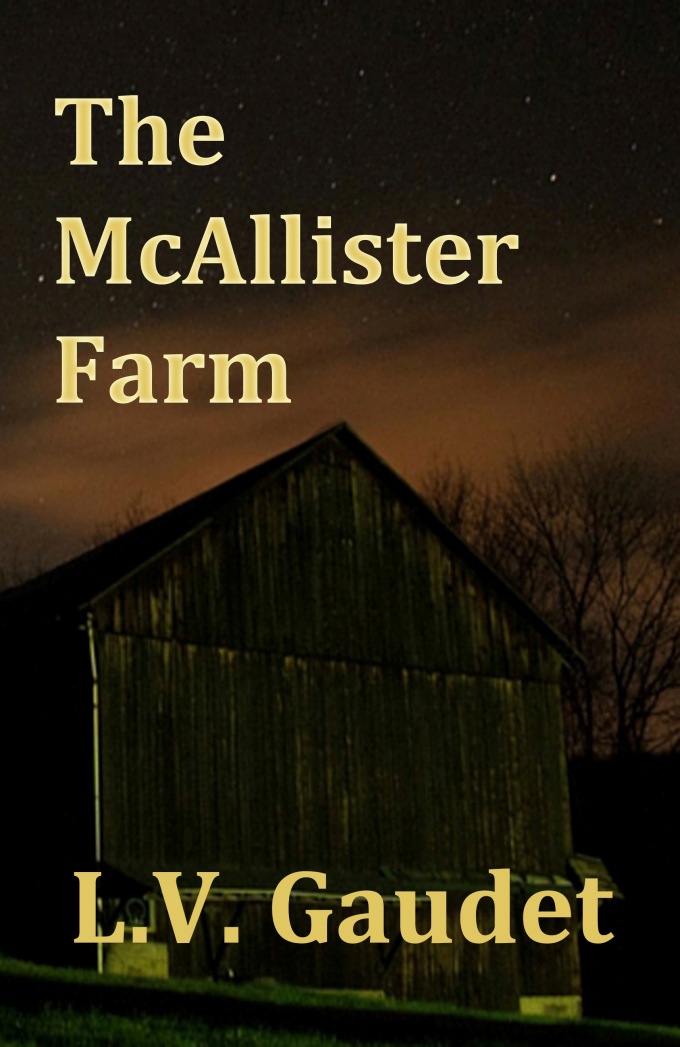
 I survived the interview and she didn’t look ill listening to my jabbering.  I have to say, the best part of the interview was the end when I gave her a copy of my latest published book, The McAllister Farm.  She was actually excited I gave it to her.
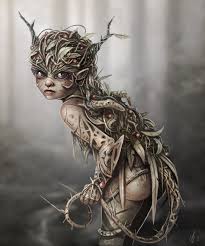
impAfter the interview, that same nasty little imp kept tugging on my shirt hem and whispering my doubts.  Why me?  There are a lot of authors out there, ones people actually heard of and know; authors who sold a lot book books and made bestseller lists, and everything.  Telling me, “You don’t even feel like a real author.”
 magic quill
What does it take to make you feel like an author?  Of course, the simplest answer should be, “You wrote a book,” or, “You published a book.”  If only life were so simple for everyone.

In all the years I spent writing, I’ve always had that nagging doubt.  I’m nobody.  Unknown.  Just some person with a story in her head (okay many stories) that need to get out.  I’m not James Patterson or Stephen King.  I don’t go by the moniker Dean Koontz or any other name anyone would recognize and say, “Hey, that’s an author!”
 I always had the doubt, expecting anyone at any time to say I’m wasting my time, I’m not a “real” author, or that my writing stinks like the rancid breath of the partially desiccated reanimated corpse of a komodo dragon with a dead skunk stuck in its mouth.
 Even after my first book, Where the Bodies Are, was published, doubts remain.  It’s only one book, after all.  But, it can’t be all that bad if someone else found it worthy of publication, right?  I still didn’t feel like a “real” author; which is probably odd, since I would without question think of anyone else who published a single book as a “real” author.
 Now I have a couple of books published, with Indigo Sea Press picking up not only Where the Bodies Are, but also my latest book, The McAllister Farm.
 With published books I now have to count on more than one finger, I still don’t feel authorey; and yes, I did just make up that word.
  intangible personTo me, an author has always been that intangible person on the other side of the book.  The magic behind the story.  Funny, I don’t look or feel magic.  Not mystical in any way.  I’m just me.
 If I had ten published books, I would probably feel the same way.  I’m just me.  Someone asked me to autograph my book she bought and it felt really weird.  I very recently sold a few books to a few people I know and they asked me to sign them.  It felt just as strange, awkward really, in a, “This is a joke, right?” kind of way.  And these were all people I’ve known for years.  I might get sucked into an abyss of weirdness in the floor if an actual stranger wanted me to sign a book.
 I’m not sure what it will take before I feel like a “real author”.  At what point this will happen, if ever.
 I asked my eleven year old what would make her feel like a “real author”.  Her answer: “If my books sold; lots.  A lot of them.”
 I asked my thirteen year old the same question. Her answer: “When a lot of people buy my books and are asking for them, and when I’m making a good profit.  And, when I’m a New York Times bestseller, because all my books are New York Times bestsellers.”
  pose question.jpg
I pose the question to you, and this is all about YOU, not for you to try to convince me that I’m a “real” author.

Authors: What made or would make you feel like a “real author”?
 Readers: What defines a “real author” for you, as opposed to thinking, “Yeah, whatever, so you wrote a book, but you aren’t a real author”?

Let the game begin.
Can you handle a little darkness?
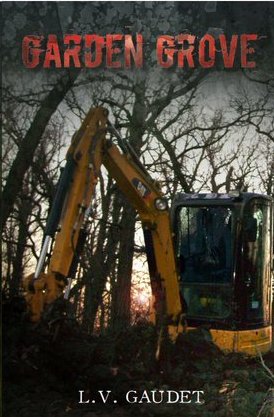
L.V. Gaudet is the author of the McAllister Series and Garden Grove.
Tormented by his inability to stop killing, the killer is taunted by his need to find the one thing he must find ...
where the bodies are
Learn the secret ... behind the bodies and how the man who created the killer became who he is ...
McAllister Farm cover 052316_edited-1 - front cover.jpg
The third book will bring these two stories together for a dramatic climax... but no story truly ends.

Sabotage, vandalism, poisoned work crew, buried bones, and two strange old people ... why is someone trying to stop the new housing development?
Garden Grove Cover - McNally - front cover


Digg!

Tuesday, August 4, 2015

To Offer it Free or Not – Marketing Your Work

Free BooksAs with everything to do with the art of writing, publishing and marketing books, there are different views on the worth of offering your books free.
Some will argue that you should not work for free.  And, in essence, that is what you are doing when you offer your books free.  You have spent countless hours writing, editing, perfecting, and polishing your writing.  You chose the perfect cover, formatted the book for eBook, and finally are rewarded with seeing your hard work available to the world.
Of course, you want some monetary gain from all that hard work.  Who wouldn’t?
But, unless you are already a well-known author, will the world even know you exist?  Will they (the readers) buy your book when you are an unknown quantity to them?  When there are so many badly written, badly edited, and just plain bad, stories out there, the reader needs to have a reason to want to invest their money in your book.
I see offering books free as a marketing tool.  Companies do it with other types of products all the time, offering try me samples in the hope you will love it enought to buy it.  The buy one-get one free offer.  Buy that and we’ll toss this in with it.  Get one month free.  Even the grocery stores get in on the action with their free sample days.  These are all teasers to encourage you to buy or try their product.
If there is one thing everyone loves, it is getting something for free.
How many books have you passed over buying because you didn’t know if you would like the author?  The write up on the back cover looks good, the cover art is enticing, but you just don’t know.  So you decide instead to buy that new book by the author you love.
This does not mean you have to give it away free forever.  Offer it free for a limited time. With so many companies marketing other products by this method, it must work.  Otherwise, they would invest that marketing money in other ways to market their products.  You can always offer it free again if it suits your needs.
You can also offer limited time coupon codes so that those who get the code can read it free while others have to purchase it.  Coupon codes can be used in a targeted marketing campaign.  For example, let’s say you are publishing a humor book suitable for grade school kids about survival while camping with scout groups.  Offer the coupon code to your local scout groups, giving the kids the eBook free.  If they read it and love it, they’ll tell their friends about it.  Target book clubs for your genre.  If your book is about gardening, offer the coupon code for free limited time download of your book to a few garden clubs.
Knowing they got something free that others have to pay for makes people feel special.  They feel like they got a prize, they feel superior, they feel a small sense of empowerment.  They feel like they matter just a little bit more.  They feel like someone cares.  Each feels special in a different way, depending on their personality.  It doesn’t matter how they feel special, you made them feel that way and they like you more for it.
The hardest part of selling books is getting readers to know it exists.If free offers help, then it is worth it.  The first job of selling your book is getting someone to read it.  If you did your job right in writing the book, then they will do your second job for you – getting them to talk about it.
People talk about books and share information on them for three reasons:
(1) They loved it,
(2) They found it controversial and it got their blood boiling,
(3) They hated it.
Nobody talks about the book that isn’t noteworthy.  They also won’t talk about it if they haven’t read it or even heard of it.  If they loved it, they will talk about it, and they also will want to read more.
I see offering books free as a marketing tool.  Companies do it with other types of products all the time, offering try me samples in the hope you will love it enought to buy it.  The buy one-get one free offer.  Buy that and we’ll toss this in with it.  Get one month free.  Even the grocery stores get in on the action with their free sample days.  These are all teasers to encourage you to buy or try their product.
Another way to get free samples of your work into your potential readers’ hands is short stories.  Offer short stories for free eBook download.  Blog them, Facebook them, share them.
Consider this:  work together with another author who writes similar stories in the same genre.  You both offer a free short story written by the other with the purchase of your book.  Both authors have a vested interest in promoting the books, one to earn the royalties and the other to get their reader audience to grow through the free short story.
Always remember to plug your other work.  Whether a book or a short story, free or for a price, always remember to include a plug for other published work that is available.
Every piece has to be your best.  Whether free or not, a 100 word flash fiction or 150,000 novel; every bit of writing you put out there needs to be good.  Advertising yourself with mediocre short stories will not increase your readership.
However you choose to market your work, the goal is the same – getting potential readers and buyers to notice you in a sea of possible authors.

Digg!

Tuesday, July 28, 2015

How to Write a Beginning that Snaps

chatperoneThe beginning of your story is the most important part.  This applies no matter what you are writing; an epic trilogy, a novel, a short story, memoire, fiction or nonfiction.
Now that I said it, I will tell you that this is a statement I personally do not agree with.
Some writers, publishers, and agents will argue that if you don’t hook the reader in the first sentence then you failed.  I’ve heard variations of this same idea multiple times.
But what kind of a first sentence does it take to have that instant hook?  And, is it even possible?
Advice will run between keeping it short and simple to using a complex sentence including multiple ways to draw the reader in with those few first words.
Set stage and tone, time and place, conflict, theme, foreshadow, tell a truth, surprise the reader,  shock them, promise a reward, don’t start with a question, relate to the reader, do not start with dialogue, be funny or absurd, raise a question, start with an action, incite an emotional reaction, connect the reader with the main character, it must be vivid, offer a tease, introduce your main character, get them fascinated with the scene, sum up the novel.
This is only a sampling of the advice you might see on how to write the perfect first sentence.  None of it is either wrong or right.  It’s also probably impossible for you to pack all of that into a single sentence without making it incredibly long and unwieldy.
As with everything about writing and every other form of art what is good, or as seems to be demanded of us the perfect reader trap, is subjective to the individual’s taste.  And each individual’s tastes are determined by too many factors to count, including their personal tastes and preferences, culture, experiences, and so much more.
So who is to say what is the perfect opening sentence?
Best First Lines from Published Novels
Consider this list: “100 Best First Lines from Novels” by American Book Review.  How many of these lines made the list simply because of who the author is or because the book became a classic?  How many of these lines would even be considered for this list if they had been published today by a less famous author?
Given the single first sentence and no other reference, which first sentence from this list would you have been hooked on, driven to read on?  Of course, many of these lines are dated and were probably red hot in their day.  But it is also too easy to look back and say that first line must have been perfect because the book was a classic.  For me, more than a few of these invoke a response of “meh”.  So they are certainly someone’s perfect first line, but not mine.
So ask yourself this: if you take the top 100 current worldwide bestsellers and poll a group on a list of only that first sentence with no reference to the author or what book it was taken from, how many would be voted as perfect first lines?  How many would instantly hook the reader, driving him or her helplessly forward to read the rest of the book?
The publishing world is full of books of every type.  Those whose perfect first line went on to set the tone for a fantastic piece of writing, those that fall flat into abysmal blandness after a great opening line, those whose opening line was only the opening to something that draws you in and hooks you as you continue, those that flop on every level, and everything in between.
Let’s face it; it takes much more than an epic first line to make a story a success.  And there are very few readers who would stop at the first line and make a judgment without reading further.
The internet is full of advice on how to write that perfect first sentencethat Snaps, pops, and otherwise grabs your reader’s attention and refuses to let go.  Even WikiHow gets in on the action.  But as you research how to make that first line that promises to make your story and career soar to unimaginable heights, you will also quickly learn that this advice is neither absolute nor universal.
Here are just a few articles on writing the first line:
While some people tell you that first line is all important, others will argue that it is not the first sentence that is the most important; that the first sentence is not the do or die of your story and writing and publishing career.
Like this writer, Chuck Sambuchino, who says this of the often pushed list of alleged literary first line masterpieces, “So here’s the deal, or my theory of the deal:  These authors didn’t worry about the opening sentence; they just started telling their stories.  There has to be a beginning.  That beginning might indicate time and place, might introduce a character.  Might reveal a thought.  Present a fact.  Drop in on some event or action in the middle.  Whatever starts the telling makes the first sentence.  Just as whatever concludes the story will make the last.”
So, how do you write that perfect first sentence?
The best advice I can give you is to just jump in and write the first sentence.  Don’t even think of it as the first sentence.  Just sit down, think about where your story starts, and start writing.  But don’t stop there.  Keep going and write the next sentence and the next.  Keep the momentum going.  Do not let yourself get bogged down and lose the feeling of the narrative worrying over whether or not that first sentence snaps.  If you feel the flow, just keep going and worry about perfection later.
Now put it aside.   Let your mind take a break before you go back to it.
Read it and ask yourself, “Would I read this?”  Does the first sentence do justice to the rest of that first paragraph?  Does that first paragraph make you want to read the next?  Do you feel compelled to turn the page when you reach the bottom?  Do you yearn to learn what happens next when that chapter ends?  Do you feel bored or confused anywhere?
Your first sentence sets the stage for the paragraph.  And the first paragraph draws the reader into the chapter.  But it takes so much more than one person’s opinion of whether or not your first sentence is perfect.  It takes more than the opinions of your writer’s group, your mentor, or even your publisher.
Why?  Because the truth of it is that there is no such thing a perfect first sentence.  I would compare it to the search for the ever-elusive perfect man or the perfect woman.  Every individual’s needs and ideas for what makes that ‘perfect’ are different and ever changing.
From first sentences that invoke emotion to those that set place, time, and mood, the first sentence is only the beginning of something much deeper.  What makes it right depends on what your story needs it to be.  What makes it right is not obsessing over whether or not that first sentence is perfect enough, but rather how it works as a foundation for that first paragraph and the story as a whole.
What makes it perfect is making it feel perfectly natural.
Research what others recommend, take advice from different sources, and most importantly, know that every story is different and that means that what works for each story is different.  Every piece of advice is exactly that, it is that individual’s personal opinion, their recommendation and offered guidance.
Now go out there and write the first sentence that is perfect for your story.

Digg!

Wednesday, July 22, 2015

How Not to Get Noticed by Other Writers, Agents, Other Publishing Types, and Book Junkies

noticemeThis is my own personal 10 steps on how NOT to get noticed by other writers, agents, various other publishing types, and assorted book junkies.  These tips, of course, are in no particular order.  Failure to follow any one or more might risk exposing yourself to being (gulp) noticed.
Step 1 – Don’t be funny.  Seriously, humor brings smiles, which then bring good feelings.  Humor, smiles, and warm fuzzy feelings breed a sense of familiarity.  If someone in any way feels that familiarity towards you, you feel like a friend to them and you have been noticed.
Step 2 – Don’t follow blogs and other websites.  You never know when the author might peek to see who is following.
Step 3 – Don’t use a memorable picture.  We don’t all like the idea of pasting pictures of ourselves online for the whole world to see.  Sometimes we’d prefer a photo of something else, like your cat or an apple, or better yet that generic silhouette default picture a few billion other users are using.  Best to stick with the generic silhouette, everybody is sick to death of looking at the Grumpy Cat and all those other over-used images.  If you use a memorable picture of something interesting, you risk being noticed.  Worse, use a good picture of yourself and you might be recognized across more than one social media site.  Then you would feel like a real person to others instead one of the multitude of online semi-anonymous acquaintances.
Step 4 – Don’t bop around blogs leaving comments.  Sometimes those comments actually get read.  You never know when someone might decide to follow the link back to your own blog, and then, you got it, chances are you’ve been noticed, and maybe even a few more followers.
Step 5 – Don’t blog regularly about writing, being a writer, your hobbies and passions, family, cooking recipes, or the thousands on thousands of other things people blog on.  A regular blog gets followers.
Step 6 – Multi social media.  This is a definite ‘no’.  Sharing and posting your own blog posts, links to others’ blog posts and book reviews and reviews on their books, and general sharing across multiple social media sites is a recipe for disaster if you want to stay entirely anonymous.
Step 7 – Don’t follow other writers and publishing world peeps in sites like Twitter, Facebook, LinkedIn, Google+, et al with wild abandon.  They have a tendency to follow back and even re-tweet/repost your posts to their own followers if you do the same for them.  That will only build your online presence, instead of keeping you in that obscurity it is so easy to hide behind.
Step 9 – Be selfish.  Don’t do favors for others without the expectation of a return on your investment of time.  Hosting other authors in the forms of interviews, guest blogs, and posting links to reviews on their books or reviewing their books for nothing more than the exchange of a free copy of their book, these are all recipes for disaster when you want no one to notice you.  Not only will those people share your posts with their own followers, they might even be grateful, appreciate your kindness, and even return the favor some time.
Step 10 – This one is maybe the most important.  Don’t keep writing and writing and writing. The more you write, stories, blogs, and anything else you publish for free download or for sale, the more likely it is that you will develop a fan base.
Now let’s get serious about why you really read this article.
When you feel rejected, dejected, and let down that no one seems to be noticing you … stop it.  This isn’t high school; it only feels like it is.  Everyone out there is trying so hard to get you and everyone else to notice them, that they might not even see you.  Yes Virginia, it is a popularity contest, and the winners are the ones with publishing contracts and large book sale counts.
We all want the same thing, to be writers; and not just that, but to be published writers and have someone love our books.  In order for that to happen, you have to be noticed.  People have to find your book and actually buy it, read it, and rave to their friends about it.  The hard part is getting your book noticed in the sea of books out there.
Don’t let yourself feel down about that when it doesn’t happen.  Even some of the most popular authors struggled in the beginning to be discovered by their fans.  We are all struggling for the same thing, so you are not alone.  Getting discovered has as much to do with luck and it does putting yourself out there and working hard.
And, as a final word, don’t assume that breaking any or all of the rules above will get you noticed.  Sometimes you just have to be at the right place at the right time, and sometimes you have to do something very noticeable to get noticed.  The World Wide Web is a vast dark and dusty weaving of emptiness filled with the intangible beyond your computer screen.  Sometimes, you just can’t get noticed sitting in a room by yourself no matter how hard you wave your arms.   And other times, you might hit on that one magic stroke of luck and you are made.

Digg!

Wednesday, July 15, 2015

Grammatical Correctness, is it wrong?

9a87e-grammatically_correct_catIs being grammatically correct really correct?
From the beginning years of grade school, you were admonished to “watch your grammar.”  Through the years growing up, your grammar was corrected, your papers were graded on the use of proper grammar, and you were advised to fix your grammar.
Now you have made that final step and there is no turning back.  You have decided, “I am a writer.”  Great!  Now you can finally use all those perfect grammar skills that have been demanded from you all those years.  Are you ready?  No?  Good.
Is it correct to be grammatically correct?  The short answer is ‘sometimes’.  Should you write that way?  Sometimes.  In fact, there are no doubt some wonderful tombs parked somewhere on dusty shelves written entirely in perfect grammar, although I haven’t actually seen any personally.  Should you write your story in correct grammar?  Probably some, but not all of it.
As a writer, correct grammar is just as important as it was in grade school.  But, it is also important to know when ignore those grammar rules.
right and wrong grammarConsider the rough character.  He has lived on the streets, surviving the best he can.  He has a full history of problems and hardships that have driven him to this point.  Now imagine that character talking and thinking in perfect grammar.
Good writing draws the reader in.  It flows in their mind so that they are absorbed into the world you created, feeling and living it without consciously reading it.
Now here is a writing exercise you can practice anywhere.  Pay attention.  Pay attention and take mental note of the conversations around you and the words going through your own mind; not so much on what is being said, but on how it is being said.
Most people do not think or speak in proper grammar.  They use contractions a lot and at some point break various other perfect grammar rules.  People also often speak in incomplete sentences and using the forms slang speech common to their particular lifestyle, background, and community.  Speech and thoughts expressed in perfect grammar sounds formal.  It could be a good tool as well when you want that formal feeling in your story.  But it won’t likely draw the reader into the story in the long run.
You want your story to flow in the same way that most people’s thoughts flow naturally.  You want your characters and the situations you put them in to feel real.  Use formal proper grammar where needed, but also know that a more casual flow of thoughts and words are essential to make a story flow naturally.

Digg!

Sunday, April 19, 2015

It’s All in A (Pen) Name

As most writers have already figured out, names are an important tool in writing.

The name alone, on first impression, can make a character seem weak or strong, nasty or gentle, or even wise or foolish.

As an example, in the old television series Grizzly Adams (the younger generation of writers may never have heard of it), two of the main characters are Grizzly Adams and Gentle Ben.  As his name suggests, the woodsman Adams is a grizzled sort, a rough looking mountain man.  Contrary to his name, he was also kind hearted and ran around saving everybody.  His name also plays on his role as a mountain man and keeper of a pet grizzly bear.  His co-star’s name, Ben, itself seems gentle and calm, more so with adding the prefix Gentle to the name.  If you haven’t figured it out from the description of Adams, Ben is a gentle and peaceful grizzly bear.
The same first impression applies to the titles we give our works.

As the writer, you may agonize over the names of every character, searching for the perfect name.  You also may find yourself agonizing over the name of the story too.

The title of the story is the first thing a reader sees, aside from the cover art.  A bad title can be just as damaging to the image of the book as bad cover art.  That first impression is what will decide whether or not that potential reader will pick up that book to read the back cover blurb or skim the pages, or bypass it to pick up the book beside it instead.

Here are three books that are on Amazon.  You have only a title and cover art to decide.  Which one would you pick up?


But what about the name of the author?
In the same way the book title is the first impression a reader gets of your story, your author name is the first impression they get of you.

For some, living in obscurity and safe from the prying eyes of their fans is preferable.  After all, not everyone is cut out for a life of being recognized, especially if he or she is shy.

For others, an assumed pen name is all about finding the perfect name for the author image they want to put out there with their books.

Some writers would not hear of using anything but their real name on their writing, after all it is their hard work and they deserve the credit.  Right?

Some may even see writing under an assumed name to be akin to hiding behind a mask, as if afraid to let their true identity be known.

Of course, secret identities are not always a bad thing.  Super heroes do it all the time.

Sometimes it is in an author’s best interest to don that mask of invisibility and watch the world through a pseudonym.

The reasons for using your real name vs. a pen name are as numerous and there are authors.


Good vs. Bad Names
Authors and actors alike work under assumed names for many reason.  For some it is because they do not think their real names will cut it.  Maybe they’ve been made fun of as kids and are embarrassed by their real names.  Or they are just looking for a name that pops.  One that stands out as memorable so it will help them get ahead in a business that is almost impossible to break into.


The many rejections of Stephen King
Even Stephen King wrote under a pen name for a while.  Like many other writers, Stephen King also faced his share of rejections before becoming a household name.  I’ve read repeatedly over the years that he turned to the pen name Richard Bachman after being unable to sell a single novel under the name Stephen King.  Mostly that was around the rumour mill.

However, this article http://en.wikipedia.org/wiki/Richard_Bachman refutes that claim, which puts the former in the category of hearsay and gossip.  According to this article and others like it, writing under the pen name was more about getting more books published than the publishers would allow by one author for fear of saturating the market with a single author.  And, perhaps as the article suggests, it was in part an experiment.  After being outed as Richard Bachman and Stephen King being the same person, he went on to write exclusively as Stephen King.


Oh For the Love of Privacy
Of course, another reason for using a false name is to protect the privacy of the writer.  Some writers may be concerned that if they ever make it big their private lives will be put out there for the entire world to see.  Of course with technology and information sharing the way it is today, this will probably happen regardless of attempts to hide behind an assumed name.

However, there are some steps that can be taken to make it harder to find out who you are.  Such as is outlined here:  U.S. copyright office – pseudonyms


Genre Confusion
It may be advisable for any writer publishing in more than one genre to use pen names.

Readers like consistency and reliability.  When they pick up a book by a certain author, they expect that author to follow through on the promise implied by the quality and nature of their other books the reader has read.

It wouldn’t do for Suzy Homemaker to buy Sally Schoolgirl that new chapter book by her favourite author only to discover through the child’s look of horror and disgust that the book is actually an erotica novel.

And a horror novel lover probably won’t be buying your books ever again if that next one turns out to be a sappy 18th century romance.  The same goes for that romance fan who starts reading to discover to her disgust that the twists and turns are about what brutal way the heroine will be murdered instead of whether or not he will kiss her.

So, for the sake both of not alienating your readers, and for your own reputation, it is probably wise to use a different pen name for each genre you publish in.

Of course this does not apply to sub-genres.  Using a different pen name for your thriller mystery with a touch of romance than the one used for your thriller suspense would possibly push all your many pen name aliases into obscurity.


Picking a Pen Name
Picking a pen name can be as hard as picking that perfect baby name, the character name that gives the right impression, or the story title that sells.

Why do you think actors often choose the stage names they use?  Do you think Vin Diesel would have the career he does with his real name Mark Sinclair Vincent?  Not as catchy, huh?  Definitely not when his target audience tends to be teen boys and like-minded men who want to see boobs, guns, and car chases.  And considering the types of role he plays, the stage name gives the characters the right feel.

Your pen name is perhaps just as important as your character names. After all, the character is a fictitious person in a story and may never even be carried over into another story.  But your pen name is the fictitious YOU.  This is your alter ego, your alias.  This is you and the identity you will be known as for all of those stories.  Of course, pen names can be changed and stories can be reprinted under the new name, but if the book became popular under the assumed name, it may be best to keep it as is, especially if you’ve never succeeded in making a name for yourself as yourself.

The same resources that can help you find the right names for your characters can help you find the right name for your pen name.  Sources like online baby name finders and baby name books (helpful if you want something with certain origins or meaning).


Pen Names and Copyrights
While under both Canadian and U.S. intellectual property copyright law your writing is automatically copyright protected through the act of creating it, it’s still basically a big game of he said – she said when a copyright dispute goes to court.  Without any proof it boils down to who comes off as seeming more believable to the judge.

In Canada and the U.S. you cannot copyright a pen name any more than you can a book title.  But using a well-known name of another author might leave others thinking you are only trying to ride their coattails of fame.
It may be interesting to note that according to this U.S. copyright office – pseudonyms, in the U.S. at least, your work is actually copyrighted longer if you file under a pen name and do not let your real name be known than if you do list your real name.  Of course that will only matter to whoever gets your estate after you pass on, since it counts in years after your death.


Digg!

Sunday, April 12, 2015

I’m a Publishing Newbie

I’m pretty new at the publishing game by any successfully published author’s standards.  So far, my publishing credits include a number of flash fiction and short stories published in writing e-zines, one short story in a mystery anthology published by Second Wind Publishing, and a novel also published by Second Wind.  My contribution to publishing them involved writing them, a great deal of editing, and pressing “send” on the email.
While I’ve been writing for years, I’m a publishing newbie and there’s a lot I don’t know. 

With the ever-changing landscape of the publishing world, no matter how much any of us learn there will always be more to learn.

Articles discussing the finer points of how to write fill the internet in droves, but there seems to be very little information on the other side of writing – the business side of writing.

The how-to articles on writing better also tend to be a confusing overwhelming glut of opposing opinions.  Do you listen to the blogger who vehemently insists you must mercilessly gut your writing of all of what they consider unnecessary extra words, streamlining it to a tight bare-bones written masterpiece?  Or do you listen to the blogger who just as passionately says that it is the flow and artistic expression of the writing that matters most and that you must not sanitize it by worrying about gutting it of what another might consider extra words?

The truth is that regardless of the area of the writing advice, what you need to follow will probably lie somewhere in the middle.  It can be difficult to decide which advise to follow and when.  Too much contradicting advice can leave you feeling even more confused and uncertain.  The best writers will take the advice to heart and figure out what is best for their self and each particular story.

Writing is entertaining, can help you explore questions and issues in your life, and can be used as an outlet for the unpleasant emotions we as humans tend to bottle up inside.  But if you want to be published, writing is a business too.

While exploring the answers to my own questions it occurred to me that I’m probably not the only one asking these questions.  So, I decided to share my discoveries.

I make no claims to be an expert.  Actually, I definitely am not an expert.

Like a lot of writers, I’m learning as I go.  Mostly from researching online articles from various sources and comparing notes on what they say.

The first rule of thumb with online information is "take it with a grain of salt".  In other words, never assume the information is accurate and always question the quality of the source.  So with that in mind let us go forth and learn the business together, and be forgiving when I do get something wrong.


Corrections are always welcome.  You can’t learn from your mistakes if you don’t know you made them.

Digg!